Showing posts with label China. Show all posts

Tuesday, March 5, 2013


Where is Africa when Africa is being discussed?

When the who ’s who of mining converge, one can expect nothing less than the finest thought provoking and somewhat mind-boggling numbers to be shared. The Investing in African Mining Indaba 2013 was no exception, attracting leaders from various facets of the mining industry from all corners of the globe. Africa, the new frontier of the 21st century, is set to become the largest supplier of precious minerals, base metals and chemical minerals in the future. If current trends continue, Africa could be supplying 50 - 75% of the world’s minerals as the developed world experiences depletion in their own mineral resources. While many perceive Africa’s embryonic stage of economic development as an obstacle, the business world sees this as an opportune time to scramble for Africa yet again. The acquisition of assets at this stage is much more cost effective for those in positions to acquire funding and finance operations across all sectors.
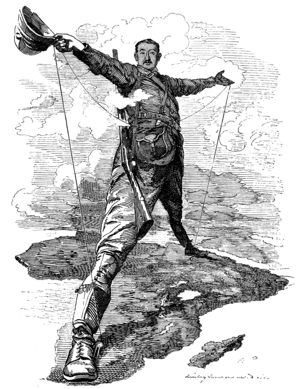
While foreign investment is vital for the development of the mining sector, it comes with adverse effects that may see African economies further plagued with issues of lopsided distribution of income and neo-colonialism. Mining companies which presented white papers, among them Rio Tinto, Anglo American, Lonmin and other large corporations with operations in various parts of Africa, divulged current and future plans to bring about social development. It seems mining companies are of the standpoint that enough is being done to give back to the mining communities in which they operate while a prominent executive went on to say, “ governments often ask for more than they are willing to give…”

The extent to which this statement holds water may be debatable but the vital question that remains unanswered is “To what proportion do social development projects equate to the value of mineral resources mining companies stand to gain?” Taking into account the capital intensive business that mining is, it can be understood that miners should have room to somewhat dictate the terms. However, left in the bank, would the large amounts of money yield much without assets such as the rich mines of Africa to generate profit?

The debate of sustainable development rages on, perhaps a one sided one, as there seemed to be a bias towards those who have the voices to speak at such forums as the Mining Indaba. The consensus among speakers was to engage all stakeholders in mapping the way forward for African mining, yet sadly, all stakeholders were not well represented.
It may be easy to berate tales of injustice and negate the good that mining has contributed to Africa through backward looking but if Africa is to truly benefit from the vast resources she boasts of, a number of things need to be put in place. While this is not an antidote to the problem of Africa’s poverty, it may very well be one of the many steps to making Africa at large experience more economic growth.

  • Easy access to information on opportunities available in mining
  • Educate local communities on the various facets of mining to encourage participation
  • Develop local and regional capital markets to encourage the participation of local junior miners to venture into the industry
  • Education from the grassroots level of the geography and needs of Africa in order to foster innovative thinking
  • Regional trade blocks to standardise regulations for the mining sector to eliminate double standards for multinational miners
  • Regional research and training institutions to encourage development of home-grown solutions for deficits in technology and skills shortages
  • Mainstream media to play a more active role in dissemination information and setting agendas that encourage participation 


Moyo challenges Chinese notion of African recolonisation

Cape Town 6 February 2013 - “China’s campaign and race for resources globally is systematic and deliberate. Not since the era of colonialism have we seen a campaign on such a scale,” says Dr Dambisa Moyo. She delivered a keynote address at the Investing in African Mining Indaba ™, under the theme: Winner Takes All: China’s Race for Resources and What It Means for the World.
Moyo challenged those who claim that China’s investment in Africa is a new form of colonialism to invest in the opportunities that abound in Africa today. “If you’re concerned about Africa being recolonised by China, then put your money where your mouth is.” She said that concerns from the West about neo-colonialism, environmental degradation are exaggerated or just plain wrong. She did, however, add a note of caution to be “vigilant and ensure that they gain something from their engagement with the Chinese.” She said that African governments must articulate their policies clearly investor.
She pointed out double-standards, saying that China is the biggest foreign lender to the United States today, yet “no-one complains about human rights violations, but when it comes to Africa there are claims of re-colonisation.”
Moyo described China’s approach to investing in Africa as a symbiotic relationship, with China offering host nations what they need. She pointed to the vast financial resources at China’s disposal, saying that China’s “deep pockets mean that they can go where others like the US and Europe cannot go.
“People question China’s ability to value an asset, they should ask why they are willing to pay a premium for an asset. The answer lies in the utility model.”  She said China is simply interested in ensuring that they secure the natural resources, so they will pay what they must. “As competitors fall away, China will have less competition and will end up paying less for resources.”
She ccontends that China has become a monopolist in some areas of the commodities market, including copper and coal.
Moyo remarks that the world is nowhere near the end of the commodities super cycle. She expects significant price increases for the foreseeable future as well as volatility in commodity markets. This will be driven by factor like population growth, a growing middle class in emerging markets and urbanisation policies in developing countries.
She pointed to some supply-side constraints though; citing land, water shortages and energy constraints, and further added that it is becoming harder to access minerals due to difficult terrain and political tensions: “There has been an increase in conflicts around the world due to resource constraints. Since 1995, there have been 25 commodity-based conflicts around the world.” She said future conflicts would revolve largely around water resources, but that minerals and energy would also generate their fair share of conflict around the world.
Moyo also spoke of an increase in natural resource nationalisation citing the examples of Mongolia, the Dominican Republic, Argentina and Australia. She said: “Governments are taking on more responsibility for mineral resources.”
She cautioned governments who are embarking on this path to be careful, citing difficulties that may arise, such as difficulties in raising capital due to uncertainties that are created by policy changes by governments, particularly in the mining sector, which is a long-term investment sector.
Moyo was named by TIME Magazine as one of the “100 Most Influential People in the World” in 2009. She was also named as one of the World Economic Forum’s Young Global Leaders. She is best known for her New York Times bestsellers “Dead Aid: Why Aid is Not Working” and “How there is a Better Way for Africa.”