Showing posts with label Mining Indaba. Show all posts

Friday, November 7, 2014

Tony Blair, Former Prime Minister of the United Kingdom, to Present a Keynote Address at the 2015 Mining Indaba

MiningIndaba.png


Mining Indaba, the world’s largest mining investment event will take place on 9 – 12 February 2015 in Cape Town, South Africa

CAPE-TOWN, South-Africa, November 6, 2014/ -- The organisers of the annual Investing in African Mining Indaba announced today that Tony Blair, Prime Minister of the United Kingdom (1997 - 2007) will participate in a keynote presentation at the  2015 annual conference.  Euromoney Institutional Investor Managing Director, Mr. Christopher Fordham, will host an “Interview with Tony Blair” during a special keynote presentation.

The 2015 edition of the annual Mining Indaba, the world’s largest mining investment event will take place on 9 – 12 February 2015 in Cape Town, South Africa.
  
“Mr. Blair has vast experience as a global leader and through the charity he founded in 2008, the Africa Governance Initiative, he has worked with African governments to improve regulation and investment oversight. As a result, Mr. Blair will provide unique and charismatic insights to our global delegation who are vested in capitalising African mining,” says Jonathan Moore, Managing Director, Mining Indaba.

Tony Blair was Prime Minister of Great Britain and Northern Ireland from 1997 – 2007, having secured an historic third term in office.   As leader of the Labour party, he led extensive public service reform, introduced a national minimum wage, oversaw constitutional reform, led the London 2012 Games bid and was instrumental in the Northern Ireland peace process. He also oversaw devolution in Scotland and Wales.

Continuing his role in public life, Tony Blair now works to secure peace and prosperity in the Middle East, improve governance in Africa, encourage understanding of world faiths and boost access to sport for children in the North East of England. He also remains committed to finding solutions to climate change.

The 2015 Mining Indaba is expected to draw more than 7,000 investors, mining corporates, government leaders, global press, and other industry stakeholders from 110 countries.

In addition to Mr. Blair’s keynote presentation, the Mining Indaba will feature a blockbuster line up of global speakers including: industry’s most pervasive deal-maker, Robert Friedland of Ivanhoe Mines, global economist, Dr. Dambisa Moyo; creator of the acronym BRIC, Jim O’Neill; the World Bank’s Group emerging regions expert, Anita Marangoly George; and a host of other government leaders, world’s largest mining company CEOs, and international commodities analysts. 

Mining Indaba also includes the Investment Discovery Forum on 8-9 February in Cape Town, which offers private educational and networking setting exclusively open to accredited investors (complimentary registration available) and mining corporates to engage in deal discussions. The ability to schedule unlimited number of one-on-one meetings in this forum enables investors and mining executives to maximize their ROI for their travel and time. For more information visit http://www.miningindaba.com/DiscoveryInvest.

The Mining Indaba will include a total of five and half days of deal-making and discovery showcasing ALL of Africa’s most attractive investment opportunities unlike any other mining investment in the world. For more information on registration and programme, visit http://www.miningindaba.com.


Distributed by APO (African Press Organization) on behalf of Mining Indaba™.

Monday, February 10, 2014

SOUTH AFRICA NEEDS TO BENEFICIATE MORE OF ITS MINERAL RESOURCES

South African delegates attending the Mining Indaba Investment Promotion workshop in Cape Town were encouraged to beneficiate more of the country’s mineral resources in order to create jobs and drive enhanced revenue creation. The Investment Promotion workshop was organised by the Department of Trade and industry (the dti) in conjunction with the Department of Mineral Resources (DMR).

Addressing investors and South African mining representatives during the workshop, the Chief Director of Investment Promotion at the dti, Yunus Hoosen said the push for industrialisation by government was done through the beneficiation strategy and the Industrial Policy Action Plan (IPAP).

“Industrialisation is outlined in the country’s medium-term growth plan, the New Growth Path (NGP), which identifies mineral beneficiation as part of job drivers, and one of the six key sectors for creating five million new jobs by 2020,” said Hoosen.

Hoosen added that South Africa still export most of its minerals as semi-processed minerals rather than high value intermediate to finished products.

The Chief Executive Officer of Brand South Africa, Mr Miller Matola urged delegates to take advantage of all investment opportunities offered in the mining industry and other sectors.

“South Africa is making huge investments in skills development which will help drive the economy and create sustainable jobs,” said Matola.

Matola highlighted that South Africa, like any other country has challenges, but it is how South Africa chooses to respond to these challenges that matters.

Thursday, February 6, 2014

Profit versus Purpose – a Mining Industry in a State of Flux

Shareholders and stakeholders need to come to the party to identify solutions to ensure the survival of the mining industry.

Cape Town, 5 February 2014: The balance between sustainability and profitability has always been a difficult one to strike, particularly within the mining industry. All too often, the pursuit of generating revenue is put above the importance of social engagement in the communities that the sector impacts. Although corporate social investment has always been a critical factor in the mining industry, more often than not proper measures are not taken to ensure their tangible impact.

According to DuPont Global Consulting Solutions, as uncertainty and complexity continue to define the context in which mining companies operate, executives are facing pressures to become more competitive and agile, while also delivering tangible value for all stakeholders.

Speaking at the 2014 African Mining Indaba, Simon Herriot, Managing Director, DuPont Global Consulting Solutions had this to say, “The need for, and desire of, mining companies to maximise benefits for local communities is quite clear.  And yet, while many mining companies have bolstered their commitment and understanding of sustainable development, successful implementation remains a challenge.”

He further said, “Sustainable implementation can only happen when executives start to balance shareholder accountability with stakeholder concerns, and company success with social progress. In doing so, executives can provide products that not only address the communities’ need, but the expectations of consumers and society – while accessing new markets, creating demand and spurring growth.

Herriot added that key to this is a belief that the mining sector can truly become a vehicle for positive societal change. Historical impressions of an industry only interested in profit at any cost must be reversed in favour of a more inclusive approach that intends to share benefits of the company being in operation with community stakeholders and company shareholders alike.

The greatest obstacle towards achieving this ideal is twofold – an efficient and productive workforce and finding alternative energy solutions to help fight souring energy costs.

Finding a balance between employment and mechanisation has always been challenging for the mining industry. The best approach, Herriott believes, is one that aligns skills development and educational programmes to future business needs.

“Championing sustainable labour solutions within the mining industry relies on educating and uplifting communities. In many ways, large global entities can benefit from a dedication to promoting skills development. If executed correctly, this can directly serve the business requirements while engaging the communities.”

“Promoting critical skills development in science and mathematics with a view towards training rural youth to become mechanical or industrial engineers, for example, is an approach that can have a long-lasting impact. This allows the mine to focus on implementing mechanization where required to protect profitability, while benefitting from a well-trained and skilled work force.”


The necessity to reduce energy consumption and unnecessary wastage of valuable resources is also critical to the process. This approach demands a long-term dedication from all stakeholders and will not be something that is rectified over-night. “As such it is essential that the mining industry work together to achieve a sustainable solution ” , concludes Herriott. 

Wednesday, February 5, 2014

MINING INDABA WILL GENERATE SUBSTANTIAL LEADS FOR AFRICAN COMPANIES


 The Mining Indaba that is currently taking place in Cape Town will generate substantial leads for future investment and collaboration in the mining sector for South African companies. This was said by the Chief Director for Investment Promotion at the Department of Trade and Industry (the dti) Mr Yunus Hoosen

He was speaking on the side-lines of the Africa Mining Indaba where twenty four companies supported by the dti are exhibiting in the South African National Pavilion set up in partnership with the Department of Mineral Resources (DMR) and the Department of Science and Technology (DST) is supporting.

“The companies exhibiting in the pavilion represent mining houses, professional services, engineering and capital equipment manufacturers who are capable of developing value chain with their respective counterparts in other countries,” said Hoosen.

He added that the Mining Indaba will afford these mining companies an opportunity to showcase their expertise especially in the area of beneficiation.

“Government still wants to attract and encourage investment in the sector in order to grow the economy and also to explore joint ventures for future major mining infrastructure projects in South Africa,” he explained.

The dti delegation will be meeting with potential investors from Brazil, India, Nigeria, Japan and Iran to explore areas of mutual benefits, throughout the week. An investment workshop will also be held on tomorrow, as part of the Indaba. 


Earlier the Minister of Mineral Resources, Susan Shabangu, told delegates at the Mining Indaba that the event has contributed significantly in attracting the appropriate attention to the potential of African mining investment and development.  She also stated that beneficiation of minerals was critical for the government and formed part of the Mineral and Petroleum Resources Development Act (MPRDA) Amendment Bill.  Minister Shabangu added that government is confident that the MPRDA will provide a predictable, stable and globally competitive mining legislation that will amongst others promote investment, development and transformation.

Tuesday, February 4, 2014

Mining Indaba™ Announces 2014 Bursary Recipients at 20th Annual Conference


Cape Town, South Africa - 4 February 2014 - In line with its agenda of and contributing to the advancement of the country’s mining industry; Investing in African Mining Indaba™, has offered bursaries to four deserving mining engineering students. The bursaries valued at US$30 000 (R 330 0000 at the current exchange), have been awarded to Amy Dee Mc Gregor and Eesa Ebrahim from University of Wits; Itumeleng Sikosana and Siobo Takalani at the University of Pretoria. These students are in the second or third year students pursuing engineering and mining studies.

The bursary is for one academic year, 2014, and it will cover tuition, books, accommodation, meals and other related academic expenses like mine excursions. The bursary is administered and managed by Eduloan, a leading education finance and bursary management specialist operating in Southern Africa.

“The Mining Indaba is strongly committed to investing in the next generation to continue the advancement of the mining industry and further our partnership with our host country of South Africa.  This bursary program is an extension of the mission of the annual Mining Indaba – to advance mining on the continent. We are proud to have these students be part of the Mining Indaba legacy and to help in the advancement of their career and our industry,” explains Jonathan Moore, Managing Director of Mining Indaba, LLC.


As part of the award, Amy Dee McGregor and Eesa Ebrahim have been invited to attend the 2014 Mining Indaba on 3-6 February in Cape Town South Africa, where they will have an opportunity of interacting with financiers, investors and mining’s most influential stakeholders, who are expected to be part of the more than 7 800 delegates attending the Indaba. We invite you to follow their experiences on the Mining Indaba Student Blog, located at www.MiningIndaba.com. 

Tuesday, March 5, 2013


Where is Africa when Africa is being discussed?

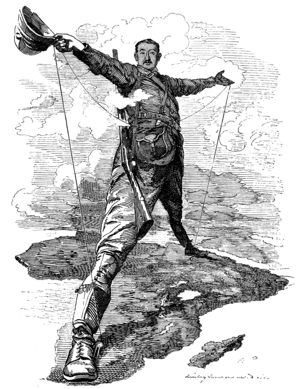
When the who ’s who of mining converge, one can expect nothing less than the finest thought provoking and somewhat mind-boggling numbers to be shared. The Investing in African Mining Indaba 2013 was no exception, attracting leaders from various facets of the mining industry from all corners of the globe. Africa, the new frontier of the 21st century, is set to become the largest supplier of precious minerals, base metals and chemical minerals in the future. If current trends continue, Africa could be supplying 50 - 75% of the world’s minerals as the developed world experiences depletion in their own mineral resources. While many perceive Africa’s embryonic stage of economic development as an obstacle, the business world sees this as an opportune time to scramble for Africa yet again. The acquisition of assets at this stage is much more cost effective for those in positions to acquire funding and finance operations across all sectors.

While foreign investment is vital for the development of the mining sector, it comes with adverse effects that may see African economies further plagued with issues of lopsided distribution of income and neo-colonialism. Mining companies which presented white papers, among them Rio Tinto, Anglo American, Lonmin and other large corporations with operations in various parts of Africa, divulged current and future plans to bring about social development. It seems mining companies are of the standpoint that enough is being done to give back to the mining communities in which they operate while a prominent executive went on to say, “ governments often ask for more than they are willing to give…”

The extent to which this statement holds water may be debatable but the vital question that remains unanswered is “To what proportion do social development projects equate to the value of mineral resources mining companies stand to gain?” Taking into account the capital intensive business that mining is, it can be understood that miners should have room to somewhat dictate the terms. However, left in the bank, would the large amounts of money yield much without assets such as the rich mines of Africa to generate profit?

The debate of sustainable development rages on, perhaps a one sided one, as there seemed to be a bias towards those who have the voices to speak at such forums as the Mining Indaba. The consensus among speakers was to engage all stakeholders in mapping the way forward for African mining, yet sadly, all stakeholders were not well represented.
It may be easy to berate tales of injustice and negate the good that mining has contributed to Africa through backward looking but if Africa is to truly benefit from the vast resources she boasts of, a number of things need to be put in place. While this is not an antidote to the problem of Africa’s poverty, it may very well be one of the many steps to making Africa at large experience more economic growth.

  • Easy access to information on opportunities available in mining
  • Educate local communities on the various facets of mining to encourage participation
  • Develop local and regional capital markets to encourage the participation of local junior miners to venture into the industry
  • Education from the grassroots level of the geography and needs of Africa in order to foster innovative thinking
  • Regional trade blocks to standardise regulations for the mining sector to eliminate double standards for multinational miners
  • Regional research and training institutions to encourage development of home-grown solutions for deficits in technology and skills shortages
  • Mainstream media to play a more active role in dissemination information and setting agendas that encourage participation